Geological Safety in Rock Salt
First, beneath the earth’s surface, there are 500 meters of bunter sandstone. These layers consist of clay, sand, and siltstones. They ensure a spatial separation between the stored waste and the sphere of human activity and contain water-impermeable layers.
This is followed by 100 meters of impermeable clay layers, which seal the salt formation from the overlying groundwater.
The underground disposal plants are enclosed within a salt formation up to 300 meters thick, providing a gas-tight seal. This rock salt was formed around 250 million years ago through the evaporation of seawater. It offers stable geological conditions.
Rock salt behaves viscoplastically. This means it „flows“ very slowly under pressure. Any cracks or fissures that develop are automatically closed by this effect, ensuring long-term barrier function. Cavities in salt formations tend to slowly shrink over time. As a result, the salt gradually surrounds the stored waste completely. Rock salt provides a natural, maintenance-free geological barrier that safely isolates waste from the biosphere.

Geological section of the underground landfill site (example illustration)
Underground disposal process
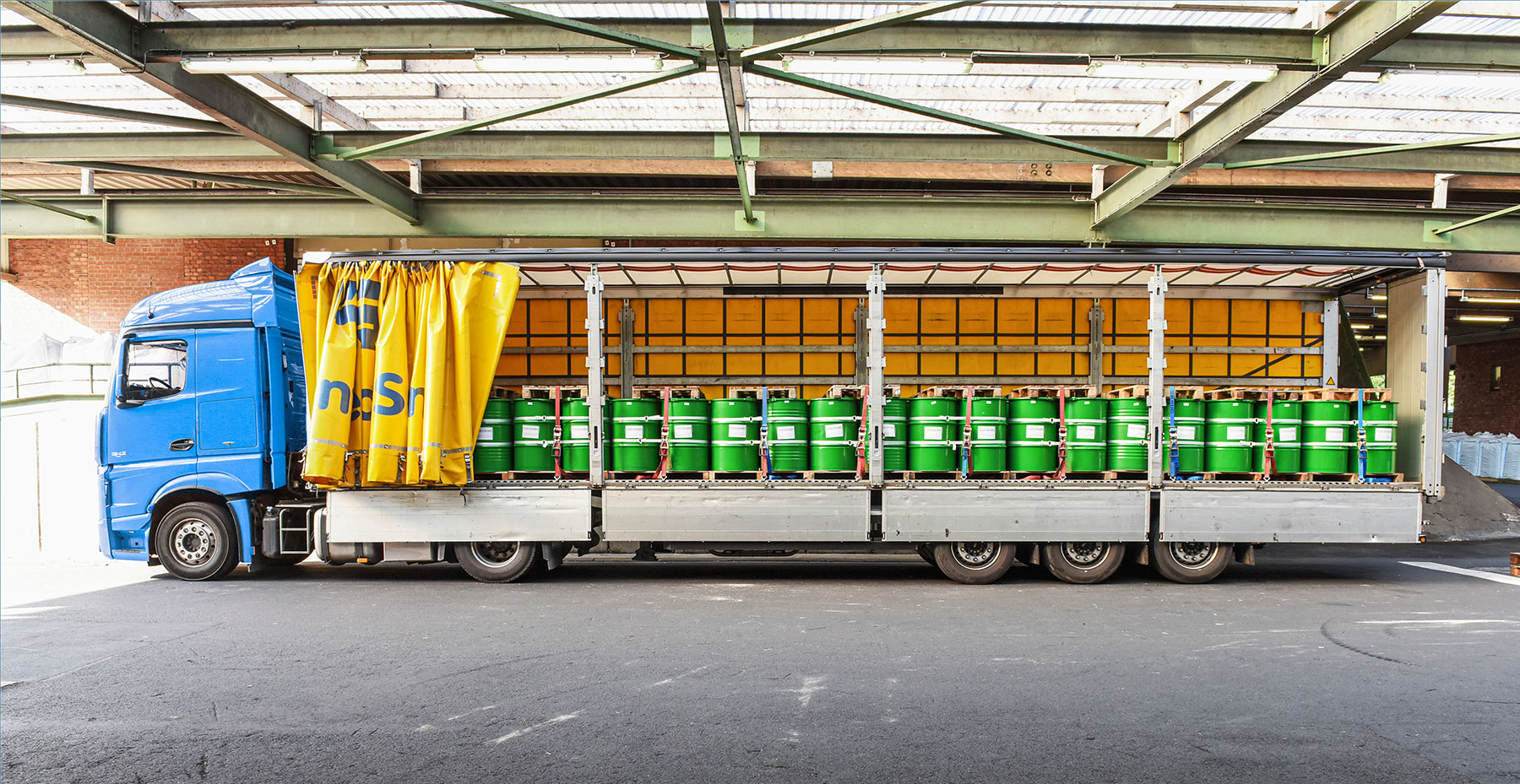
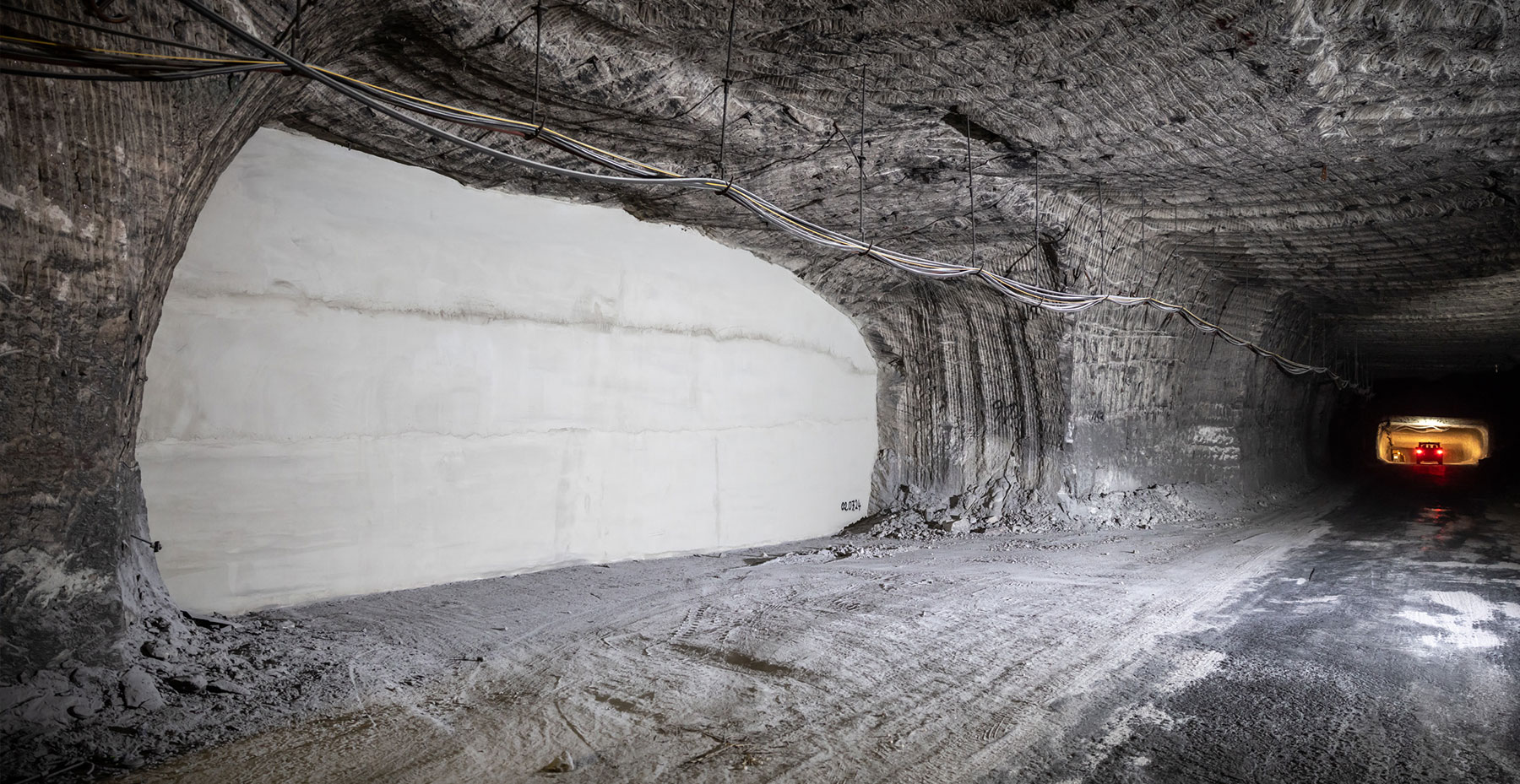
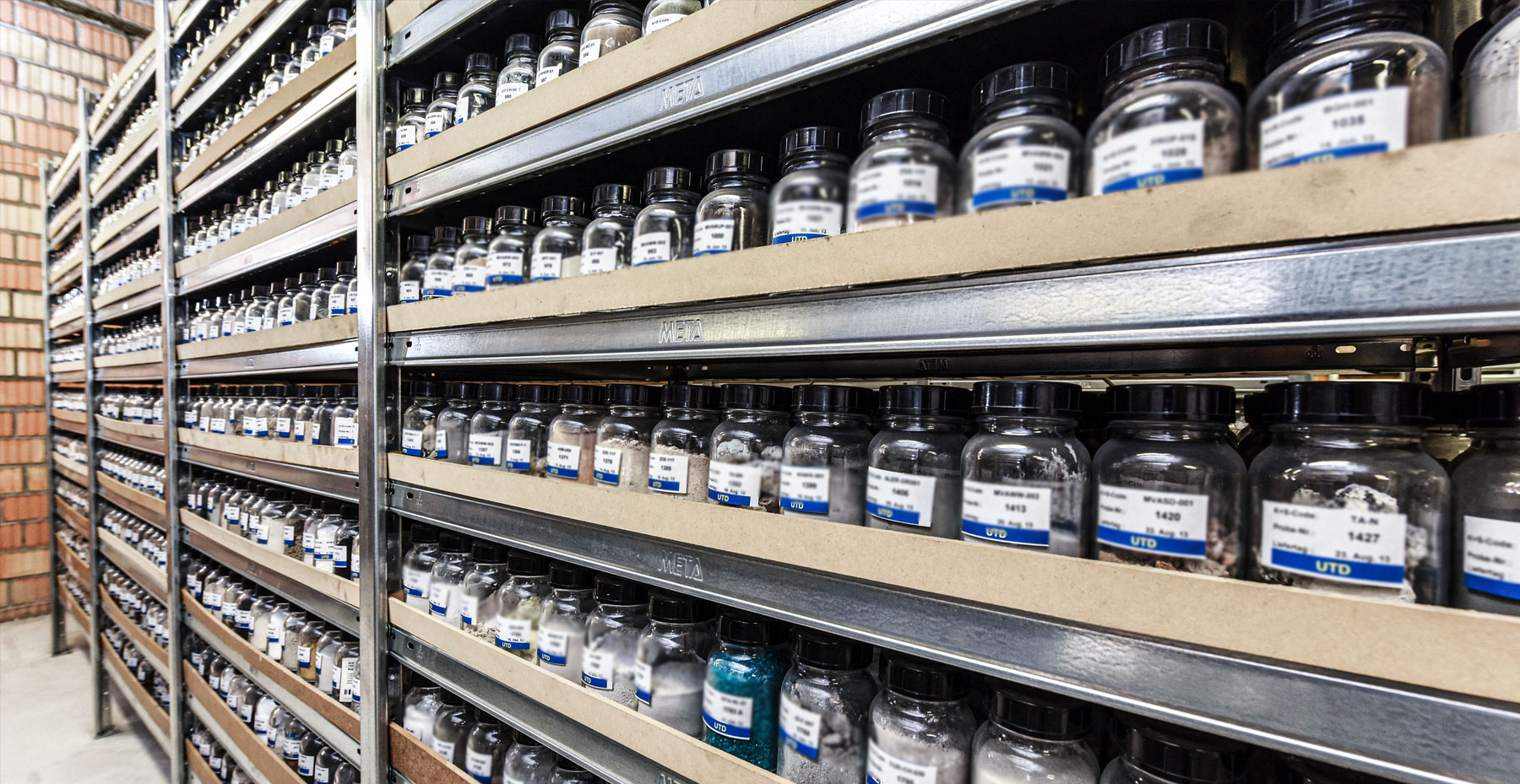


The fist step after waste is delivered to the underground disposal plant is a comprehensive acceptance check. This includes an inspection of waste volume, packaging as well as the mandatory documents and consignment notes.
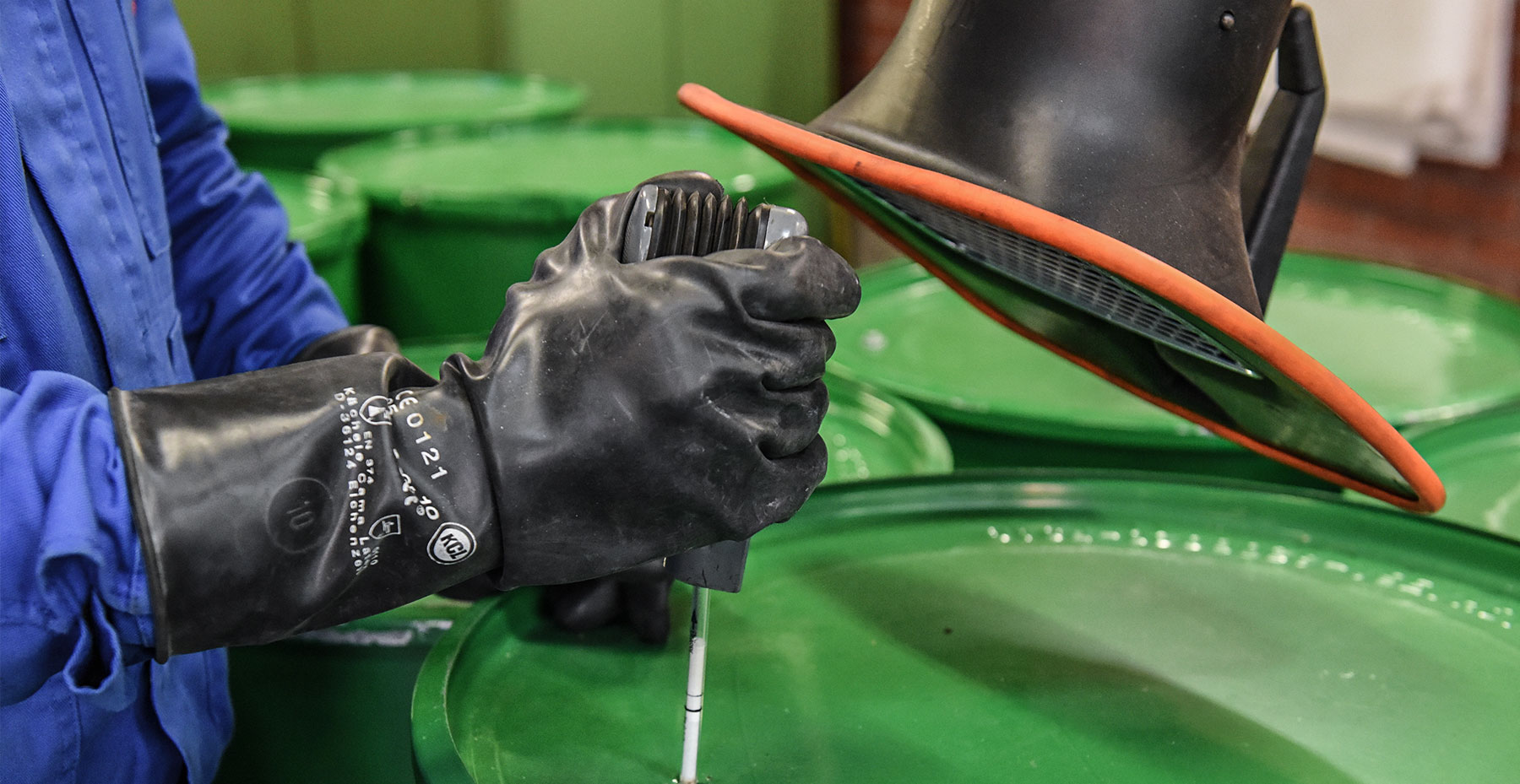
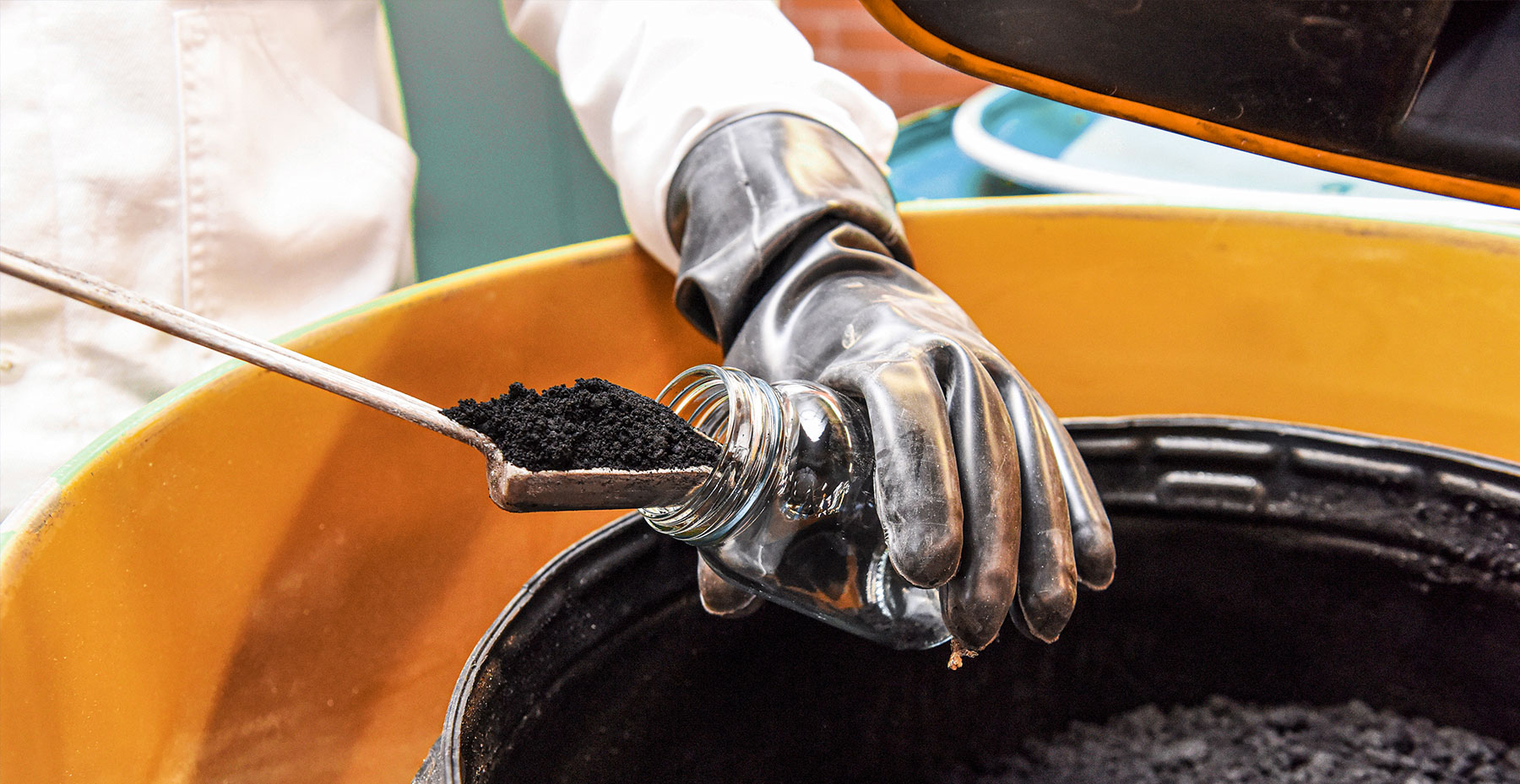
After an inspection for outgassing, wastes are subjected to visual control. An identification analysis of a sample is done. Before waste is disposed underground, a retention sample is extracted for storage.
lf the waste complies with the declaration, acceptance is completed and it is then transported to the shaft.
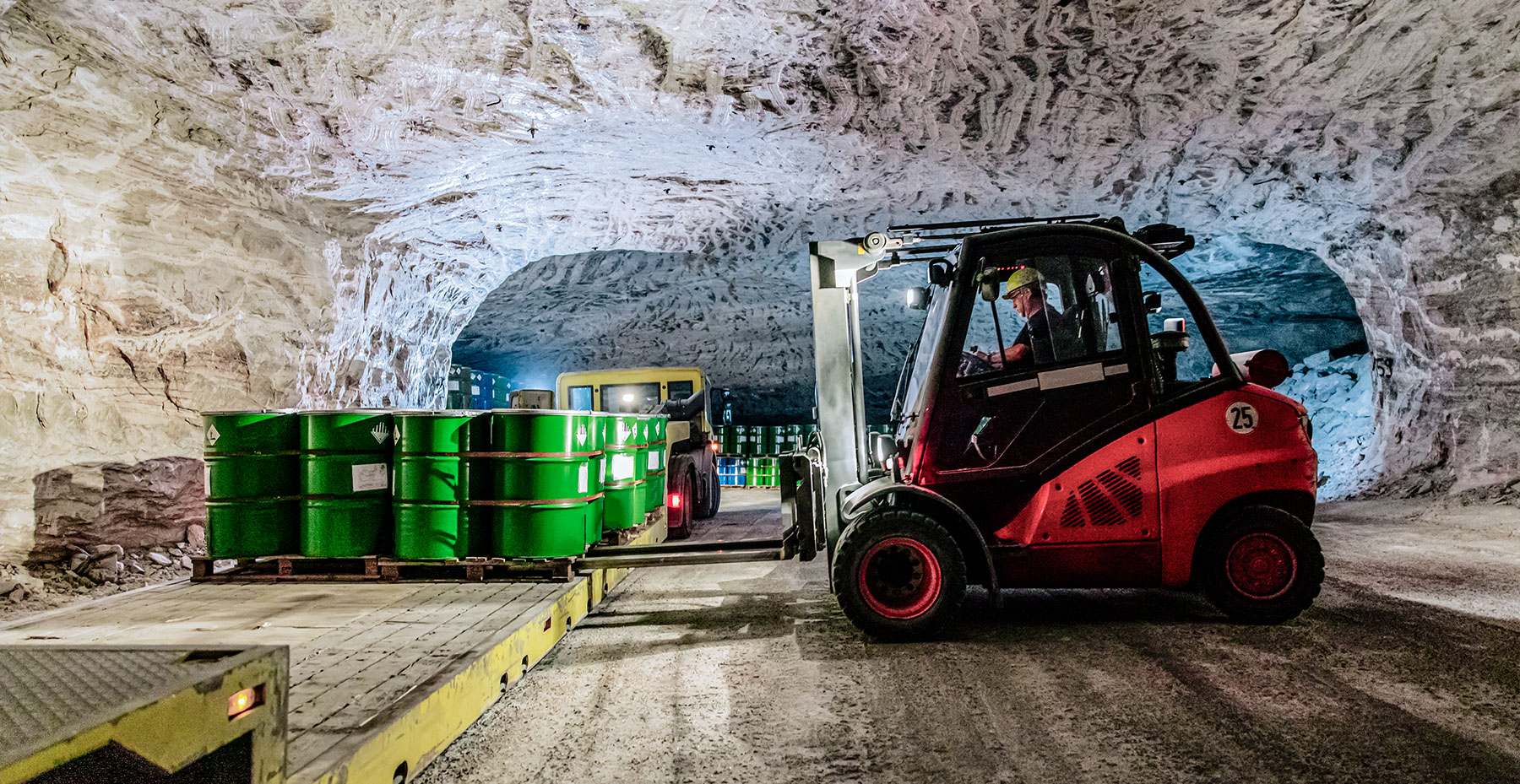
Via the shaft the waste is transported below ground and moved to the designated storage chamber in the decommissioned mine sections. There the waste is stacked in several layers.
The retention sample is stored in a separate room below ground. Storage location and time are documented.
Sections, in which the depositing-process has been completed, are closed off by walls and dams
Would you like to understand how underground waste disposal works in practice? Please contact us directly.